Guide angle
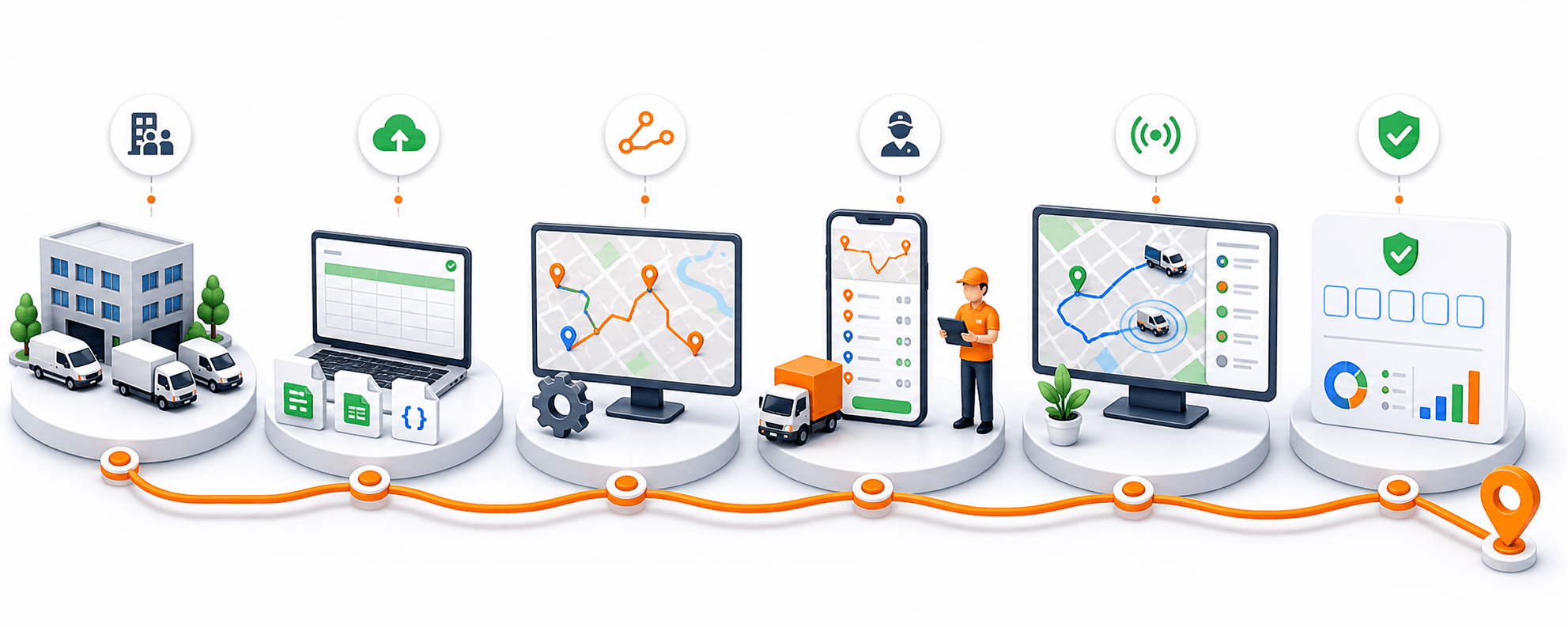
Multi-branch delivery operations need clear structure for branches, depots, users, roles, vehicles, drivers, routes, dispatch, and reporting.
What to understand
What multi-branch delivery operations mean
- Multiple branches, depots, driver pools, vehicle pools, route areas, and branch/date dispatch contexts need a shared operating model.
Core setup
- Company, branches, depots, users, roles, permissions, vehicles, drivers, and vehicle-driver assignments should be set before route work scales.
Dispatch and reporting across branches
- Dispatchers should filter by branch/date, import or create missions in the right branch, optimize with local constraints, monitor active work, and review branch-level reports.
Evaluation checklist
Where Rouptimize fits
Rouptimize connects this topic to real route planning, mission management, dispatch, driver mobile workflows, monitoring, proof-code delivery verification, reports, and route-order-credit billing. It should not be described with unsupported claims such as photo proof, customer tracking links, live traffic AI, public API pages, fake savings, or predictive analytics.
FAQ
Why does branch structure matter?
Branch structure keeps routes, users, depots, vehicles, drivers, and reports organized so work does not become one mixed operating pool.
What is a common multi-branch mistake?
A common mistake is importing all missions into one shared pool without branch ownership, permissions, or depot context.
Turn this guide into a Rouptimize workflow
Use the related docs and tutorials when your team is ready to move from concept to exact product steps.